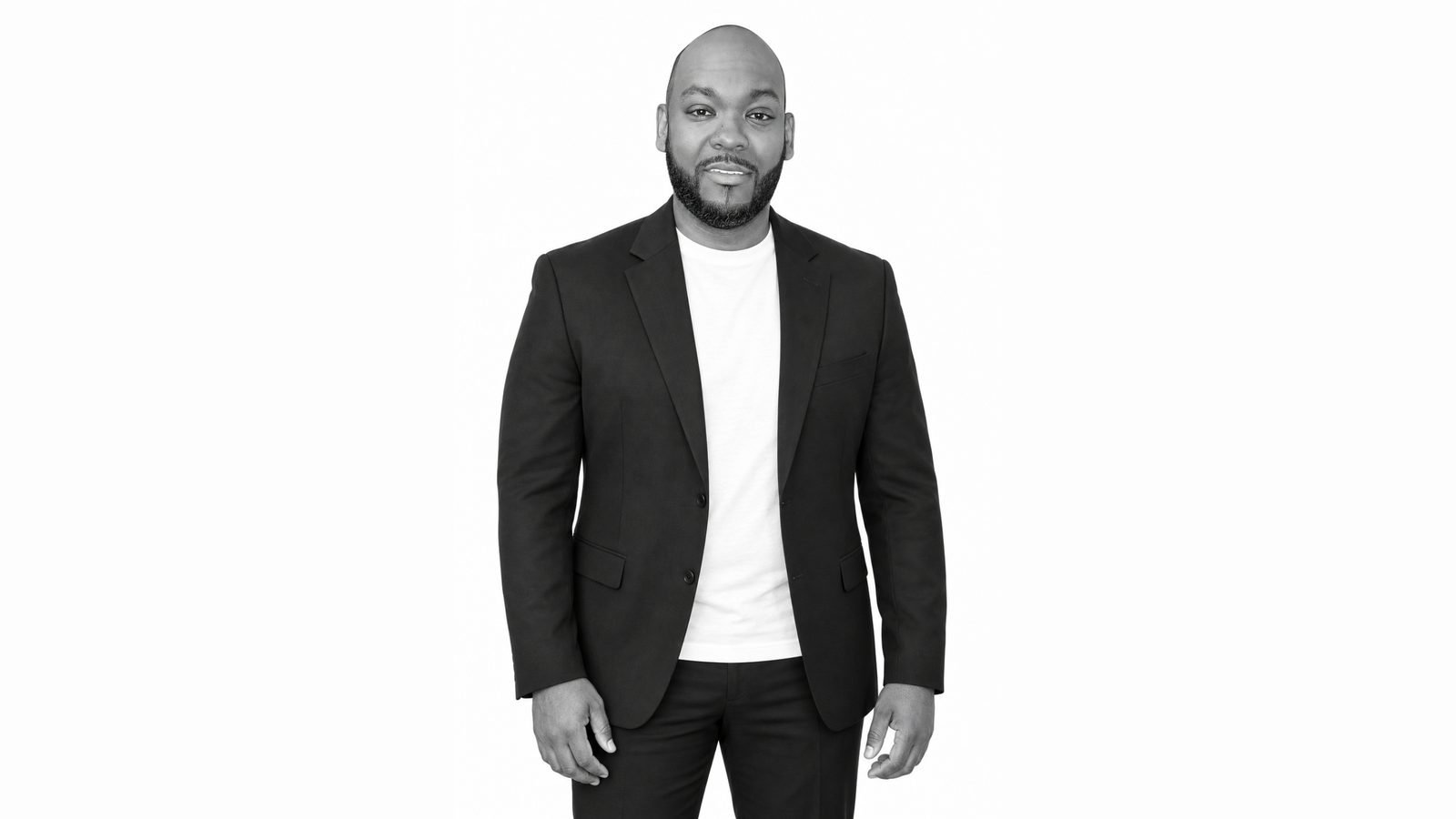
Most stories about a church launch begin with a building, a date and a budget. This one begins with a lesson. D. Brandon Campbell has been chosen by Church Experience to launch its first Georgia campus in Gwinnett County, and he is coming back to ministry after nearly nine years with a clear idea of what went wrong the first time: he did not have enough support.
Church Experience announced the Atlanta campus on October 21, 2026. Nothing is built yet, and no opening Sunday is on the calendar. What exists is a leader, a sending church, a website and a plan to start small and talk to people. That early stage is where most new congregations are won or lost, and it is the same ground covered in our guide to church guest follow-up. In this profile and interview, Campbell explains how the opportunity came about, what he learned, and how he intends to run this church launch differently.
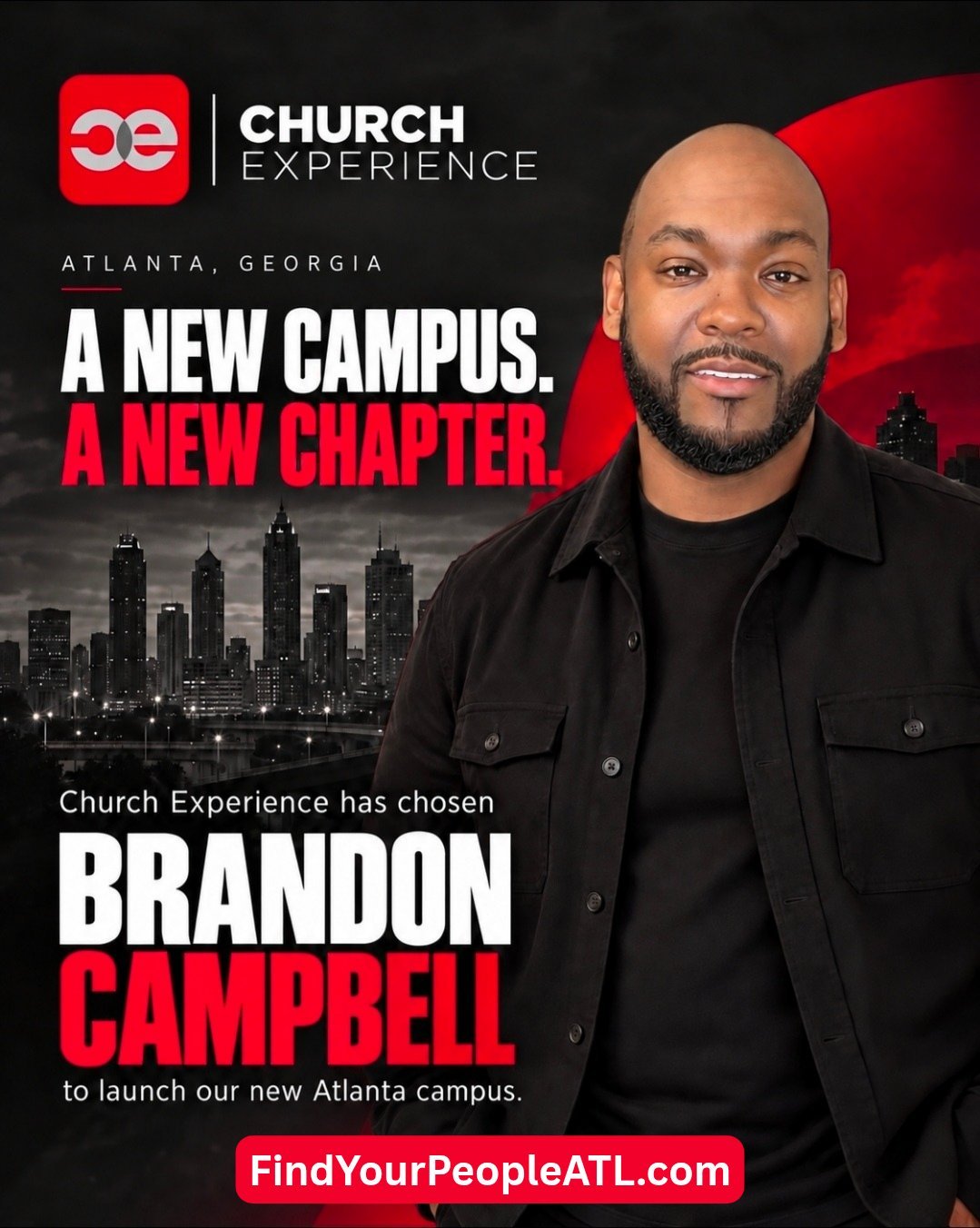
The announcement graphic for Church Experience Atlanta. Details and updates are at FindYourPeopleATL.com.
How the invitation came
Campbell says he was not looking for this. Church Experience is based outside Tampa, Florida, and its central campus is in Dunedin. The network’s website lists ten Florida locations, the Dunedin campus plus nine others, with three of those still marked coming soon. It also lists campuses in Pennsylvania, North Carolina and Eswatini, along with online options, and Atlanta will be its first location in Georgia.1
The conversations that brought him in were with the network’s ambassador, Pastor Kurt, and Senior Pastor Brandon Bruce. “I just thought this was an amazing opportunity to get back into ministry and do it with strong support,” Campbell says. “And I’m grateful.”
The word that keeps returning in his answers is support. It explains the whole decision.
Started versus launched
The first ministry Campbell led ended nearly nine years ago, and he has had a long time to think about it. By his account the church was alive. Roughly 70 percent of the people were new converts the entire time. The church ran a business, gave to other ministries and took pride in serving its community. It was also struggling.
“A launched church takes off, a started one tends to finish what you started.”
That is how he now describes the difference between the two experiences. He started a church before, he says. He did not launch one. “You can have all that, do all that, and still be struggling,” he says. “My heart was in the right place but I had no support. To do the Kingdom work, you need support.”
For pastors, this is worth reading plainly. Good people, good works and sincere faith do not replace staff, money, systems and a network that will answer the phone. Campbell does not treat asking for help as a weakness. “We need hands, hearts and wallets to support the Kingdom work,” he says. “I’m not afraid to ask for the support.”
Why Gwinnett County
Gwinnett is one of the largest and most varied counties in Georgia, and it is still growing. Campbell sees that as the point.
“Launching in a diverse and growing area provides an opportunity for us to create something that doesn’t just impact Gwinnett, but the communities and areas that need it most,” Campbell says. He wants the church to search for everybody, and to aim at people who want a safe place to grow and build healthy relationships. “We want to impact change,” he says, “and I think I can find a couple folks in Gwinnett who want just that.”
A county that changes this fast does not reward a church built for one type of household. It rewards a church that is honest about who is actually nearby.
Find your people
The campaign carries the line “Find Your People ATL,” and Campbell defines it simply. Your people are people like you who value powerful, positive relationships and want to live a fulfilling life in Jesus.
He is just as specific about what a guest should feel. “Less like their first day in school and more like the first day in their new home,” he says. His shorthand for it comes in four short sentences: “This is safe. This is real. This is spiritual. This is home.”
That standard is testable. A leader can walk through the parking lot, the greeter line, the children’s check-in and the first song and ask whether each step feels like school or like home. Most churches that try it find a few places where the answer is uncomfortable. For help on casting a vision that a whole congregation can repeat, see how to cast vision people can say back to you.
One church, with a local accent
Church Experience describes itself as “One Church, Many Experiences,” and its stated mission is helping more people experience a full life in Jesus Christ.1 Campbell says the network is more “one church” than “many experiences.”
Every campus aims to offer three things: contemporary worship that is passionate and energetic, practical life tools for believers from every walk of life, and a fun, informative children’s ministry. Those come with the network. What Atlanta adds is emphasis. “We’ll put our sauce on it and focus on strengthening our walk with Jesus but also building healthy relationships,” Campbell says. “In a world of everybody against everybody else, we want to take a break from that and be around like-minded people who love Jesus.”
This is the practical advantage of a multisite model. The new campus does not have to invent its worship style, its curriculum and its kids’ program from nothing. The local leader can spend more of his week with people.
The church launch timeline: gather first
The Atlanta site lays out four phases: Gather, Grow, Build and Launch, with Gather underway now.2 The church will be in Gwinnett County, and Lawrenceville is the preferred location, though a venue has not been announced. Campbell is direct about how early it is. The work over the next few months is fundraising, meeting people who want to build something, and partnering with a wider community that may never attend in person.
Until Sunday services begin, the church is meeting in smaller ways: Bible study, interest meetings and coffee meetups. A Coffee & Connection gathering is listed for November 28, with time and location still to be announced, and people can find the schedule at FindYourPeopleATL.com. Anyone who wants to help can sign up as a Builder or sponsor the launch through the site.
There is a lesson here for any leader who feels pressure to open fast. A church that spends its first months in living rooms and coffee shops is gathering a core group, and a core group is the thing a first service depends on.
Online roles, an operations mind, and the measure of success
Campbell expects a real portion of the church to take part online. “A great chunk of the Body of Christ lives online,” he says, so Atlanta is creating online roles for people who want to serve from anywhere. Bible studies, services and some online-only events will run on a regular basis, and he wants people who plug in that way to feel part of the community.
He also brings a business and operations background, and he does not see a conflict. “There’s no line needed to be drawn,” he says. “I’m a business-minded person, but I’ve always had integrity in my business.” His view is that an operations mind and a spiritual mind, used together, can build systems that get more done without burning people out. “We will combine business, ministry, life and lead by the Holy Spirit.”
His definition of success is short. “If Jesus is glorified, the devil is horrified and the Body of Christ is edified, then this is a success.” The measures he names are lives changed, communities impacted, and people growing in Christ. He is also realistic about scale. “I’d love thousands of people to help do the work, but if God trusts me with 10, I will do my best to steward His church with my 10.”
What other leaders can take from this
Campbell’s story is useful to pastors for a reason that has nothing to do with Atlanta. He lived the difference between a church that is started and a church that is supported, and he is deliberately rebuilding with the second kind of structure.
If you are weighing a plant, a campus or a restart, the decision rule is not complicated. Count the hands, the hearts and the wallets before you pick the date. Decide what a guest should feel in the first ten minutes before you pick the logo. Treat the months before opening as ministry. And ask for help early, in specific terms, from specific people.
To the pastors reading, Campbell has a short message. “Thank you for your work. You matter, your ministry matters and may you make demons tremble every single time you declare the word of God!”
Footnotes
Three moves you can make this week
- Write down the support your ministry needs in three words: hands, hearts and wallets. Then ask three specific people for one of them before Sunday.
- Describe in one sentence what a first-time guest should feel in the first ten minutes. Walk your own Sunday morning against that sentence and mark where it breaks.
- Name one role someone could fill online, from anywhere, and invite a person who cannot attend in person to take it.
Key takeaways
- Starting a church and launching one are different jobs. Passion and good works are not a substitute for a support structure.
- A multisite network gives a new campus shared worship, teaching and children's ministry, which frees the local leader to focus on relationships.
- Gwinnett County added roughly 60,000 residents between 2020 and 2025, and its makeup keeps changing, so a church there has to be built for many kinds of people.
- The months before the first Sunday service are ministry, not waiting. Bible study, interest meetings and coffee meetups build the core.
- Online roles let people who will never sit in the room still carry real responsibility in a local church.